Somatic Embryogenesis and
Plant Regeneration in Theobroma cacao

A Regionally Adapted Protocol for East African Deployment

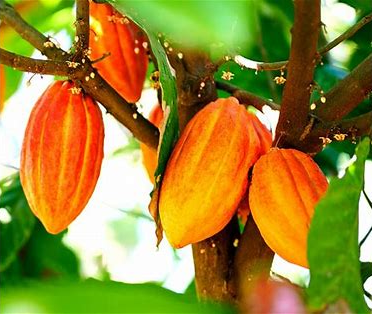
Cacao Tree Pods

THE CHOCOLATE TREE

Full‑Sun Cacao Tree Propagation – Industry Optimized Protocol

“Every cell in a plant is capable of regenerating the entire plant”
Matthias Schleiden & Theodor Schwann, 1838

Preston E. Hall         
Merryland Village Orchard Google Maps
Taita, Kenya © 2026 


Somatic Embryogenesis in Theobroma cacao

A Regionally Adapted Protocol for East African Deployment
(A modular, scalable workflow for orchard‑level propagation)

Preston E. Hall

Merryland Village Orchard, Taita, Kenya

preston_hall@tictocmind.com

tictocmind.com/cacao

Abstract—Global cacao yields are insufficient to satisfy the increasing demand for chocolate. Climate change, widespread plant diseases, aging trees, and low on-farm productivity contribute to severe supply shortages and rising prices, forcing manufacturers to alter their recipes. A propagation protocol is therefore needed to meet the growing demand for the tropical Theobroma cacao tree, which originated in the Amazon basin. This protocol offers a method for large-scale propagation of disease-free clonal trees that ordinarily grow in shaded environments. In this approach, trees are instead cultivated in full tropical sun, where they exhibit faster growth rates and produce more abundant and larger fruit. Successful full-sun cultivation requires careful stress management, particularly during the hardening stage of propagation and throughout field establishment. The method employed is somatic embryogenesis, a specialized laboratory technique in which a mass of undifferentiated cells, known as callus, is induced from non-reproductive tisuue, such as from a leaf. A callus, which is a wound tissue produced in response to injury, consists of unorganized plant cells that have not yet differentiated into specialized tissue types and therefore function as stem cells. By precisely adjusting the ratio of auxin and cytokinin hormones, these cells can be directed to differentiate into roots, stems, or other tissues. The entire procedure, which could take several months, will involve multiple processing steps in a pipeline, from the first leaf tissue to fully formed plantlets. This system's protocol has been compared to the highest used in the industry by the likes of Mars, CIAD, CATIE, the Malaysian Cocoa Board, and the Brazilian CEPLAC labs. Callus induction and embryo development are driven by a high‑performance suite of auxins and cytokinins validated across leading cacao research programs, including 2,4‑D, picloram, TDZ, BAP, IBA, ABA, and GA₃. The pipeline, from explant preparation through embryo maturation, germination, acclimation, and full‑sun conditioning is optimized for high‑light, low‑humidity environments typical of East African cacao‑growing regions.

“A differentiated and specialized somatic plant cell or a group of somatic cells with specific functions must receive a stimulus from a set of plant growth regulators (PGRs), mainly auxins, perceive it, and then initiate the transduction to the nucleus where the specific regulatory and structural genes will be transcribed and subsequently will be translated into proteins involved in the differentiation that ultimately will lead to the formation of a new somatic embryo. All these changes can be followed at morphological, ultrastructural, genetic, physiological, biochemical, and molecular levels.”

Somatic Embryogenesis: Fundamental Aspects and Applications
Springer International Publishing, Switzerland, 2016

A Regionally Adapted Protocol for
East African Deployment
– 4 –

References:

  • Maximova, S. N., Young, A., Pishak, S., Miller, C., & Guiltinan, M. J. 2005. Efficient somatic embryogenesis and plant regeneration in Theobroma cacao L. In Vitro Cellular & Developmental Biology – Plant 41: 291–299. Foundational description of cacao SE using floral and vegetative explants; widely used as a baseline protocol in research laboratories.
  • Li, Z., Traore, A., Maximova, S. N., & Guiltinan, M. J. 1998. Somatic embryogenesis and plant regeneration from floral explants of cacao (Theobroma cacao L.). Plant Cell Reports 17: 528–535. Early demonstration of reliable cacao SE from floral tissues; establishes hormonal requirements for induction and maturation.
  • Garcia, C., Alemanno, L., & Bertrand, B. 2002. Somatic embryogenesis in cacao: strategies and bottlenecks. Plant Cell, Tissue and Organ Culture 70: 157–165. Reviews genotype effects, callus behavior, and culture conditions influencing cacao SE efficiency.
  • Guillou, C., & Verdier, J. 2022. Advances in somatic embryogenesis for tropical perennial crops. Plant Biotechnology Journal 20: 1–15. Summarizes modern SE approaches, including auxin–cytokinin interactions, maturation strategies, and stress‑related improvements.
  • Rubio, L., et al. 2025. Optimizing somatic embryo maturation under high‑light conditions. Journal of Tropical Plant Science 12: 44–59. Demonstrates improved embryo quality under controlled light and ABA‑mediated stress conditioning; relevant to full‑sun acclimation.
  • Bhatt, R., Mapayi, E., & colleagues. 2024. Propagation challenges and opportunities for cacao in sub‑Saharan Africa. African Journal of Agricultural Research 19: 233–247. Discusses regional constraints, water requirements, and the need for scalable clonal propagation systems in East Africa.
  • Wikimedia Foundation. 2025. Plant stem cell. Wikipedia. General overview of plant totipotency and callus biology; useful for introductory explanations of SE concepts.
  • Kulesza, E., Thomas, P., Prewitt, S.F. et al. The cacao gene atlas: a transcriptome developmental atlas reveals highly tissue-specific and dynamically-regulated gene networks in Theobroma cacao L. BMC Plant Biol 24, 601 (2024). https://doi.org/10.1186/s12870-024-05171-9

A Regionally Adapted Protocol for
East African Deployment
– 5 –

A Specialized Laboratory Procedure:
Embryos Created from Non-Reproductive Tissue

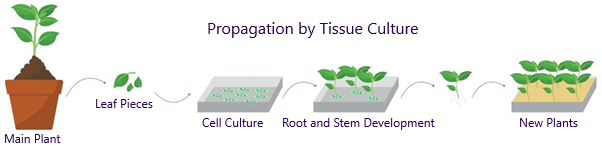
Plant tissue culture is used to reproduce plants by using small tissue samples from a plant. The process is carried out in a sterile laboratory environment from start to finish.

Somatic Embryogenesis (SE), is an advanced form of tissue culture. In standard tissue culture, the process typically begins with reproductive tissues—buds, seeds, or nodes—as explants. SE, however, takes a different approach: it creates reproductive tissue from non‑reproductive sources such as leaves.

Because many tree species require years to naturally form reproductive structures, SE offers a far more efficient pathway. In this procedure, we will be working with young leaf tissue.

SE relies on carefully controlled plant hormones to activate developmental pathways that already exist within the plant’s genetic program. A plant genome may contain tens of thousands of genes, many of which are inactive at any given moment. Genes are switched on or off depending on developmental cues, environmental signals, and hormonal conditions.

By manipulating these hormonal signals, in vitro, we can selectively activate or suppress specific genetic pathways. This controlled activation allows somatic (non‑reproductive) cells to revert to an embryogenic, totipotent, state. Over time, shifts in hormone balance guide the tissue

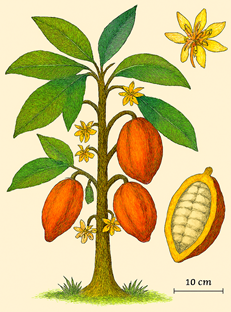
Theobroma cacao showing mature pods, flowers, leaf structure, and an opened pod with seeds

MERRYLAND VILLAGE ORCHARD, KENYA

Fig. 1. Botanical illustration of Theobroma cacao showcases mature pods, flowers, leaves, and an opened pod filled with seeds. This tree is known for its tap-rooted structure, typically growing to a height of 5 to 10 meters. Remarkably, flowers and fruit pods develop directly from the trunk. Various insects, including thrips, midges, ants, and aphids, contribute to its pollination. The young pod, called the cherelle, first elongates longitudinally before increasing in width. The maturation process after fertilization takes about 150 to 180 days, depending on the specific variety. When the pod is ripe, it takes on a light yellow hue, indicating it’s ready for harvesting. The genus name comes from the Greek words ‘theos’ (meaning god) and ‘broma’ (meaning food), together translating to ‘food of the gods.’

through stages of dedifferentiation and reprogramming, ultimately forming embryogenic callus—the first step in generating embryos from leaf tissue.

A Regionally Adapted Protocol for
East African Deployment
– 6 –

This is the strategy we will use to transform non‑reproductive cacao leaf tissue into reproductive, embryo‑forming callus, then ultimately into plantlets ready for the field.

-------------
Streamlining Embryogenesis:
Gene Targeted Activation for Faster,
More Efficient Development

-------------

Cacao: A Tropical Shade-Grown
Fruit with Full-Sun Potential

Theobroma cacao, whose name literally means “food of the gods,” is the main ingredient of chocolate. The evergreen cacao tree grows within 10 degrees north or south of the equator, where temperatures are consistently warm, rainfall is abundant, and humidity is high. Although the cacao tree grows naturally in the shade of other trees, it can grow more quickly and produce more and larger fruits when exposed to full-sun, provided that proper stress management is in place.

This management involves two key phases. First, during the later stages of the tissue culture, the plantlets are gradually acclimated to higher light levels. As light intensity increases, their water requirements rise accordingly. Once grown under full-sun, the plants consistently receive additional water and fertilizer throughout their entire lifespan to maintain healthy growth. We want to maintain daily water levels of 4-15 liters for each tree depending on seasonal conditions.

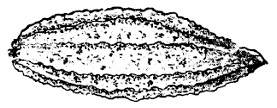
Criollo

Criollo

In Africa, three main varieties of cocoa are grown: Criollo, Forastero, and Trinitario. Ripe Criollo pods are identified by their elongated shape, yellow or red color, deep furrows, and noticeable warts. While this variety produces a smaller yield, the quality of the cocoa is exceptionally high, primarily cultivated in America.Forastero

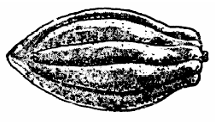
Forastero

In contrast, Forastero pods are shorter, yellow, smooth without warts, and have shallow furrows. Although this variety offers a high yield, its quality is generally lower than that of Criollo, and it is extensively farmed across Africa. The Amelonado variety selected from the Forastero types and is self-compatible (i.e., will set fruit from its own pollen). Trinitario, a hybrid of Criollo and Forastero, produces pods that can vary in length and display red and yellow colors, yielding cocoa of moderate quality.

FOOD AND AGRICULTURE ORGANIZATION OF
THE UNITED NATION, Rome 1977

A Regionally Adapted Protocol for
East African Deployment
– 7 –

Botanical Illustrations of Orthotropic,
Then Plagiotropic Growth Forms in Cacao Plants Botanical-Ilustration

THE CACAO GENE ATLAS

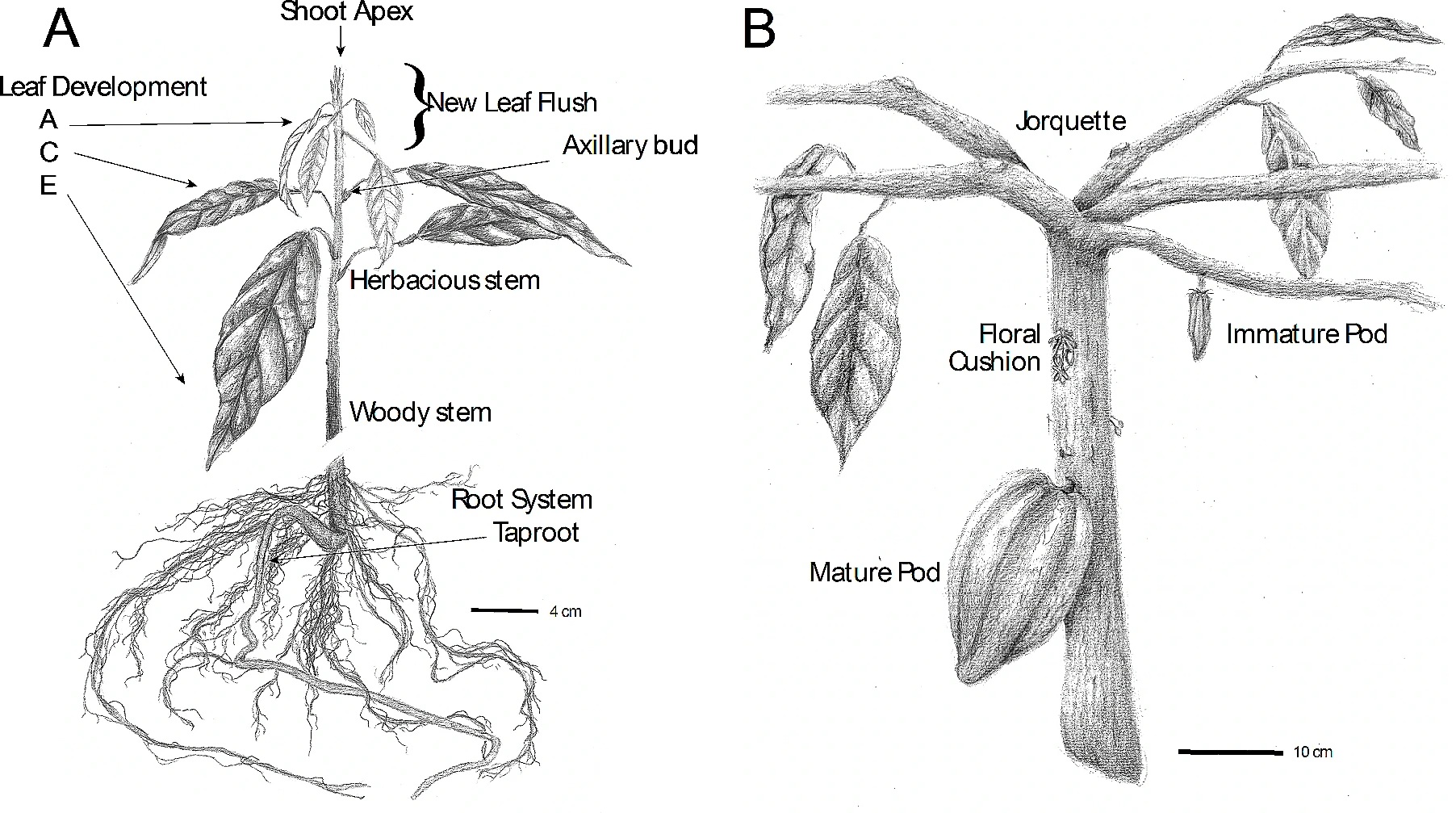
Fig. 2. Illustrations showing (A) a 6-month-old orthotropic plant undergoing a new leaf flush and (B) the trunk and jorquette of a mature plagiotropic plant growing fruits and flowers. Orthotropic plants grow vertically, and produce leaves with spiral phyllotaxy, while plagiotropic plants form five branches growing at a fixed angle from vertical growth and producing leaves with alternate phyllotaxy (most leaves in image removed to highlight jorquette structure). Clusters of inflorescences form on main trunks or branches (commonly called floral cushions). A mature fruit (fruit) is depicted, a cross section and sub-tissues are shown in Fig. 2A.


A Regionally Adapted Protocol for
East African Deployment
– 8 –

Building a Lab Plant Tissue Culture Explant Containers

A Basic Tissue Culture Laboratory

A minimum cacao SE laboratory requires only basic sterilization supplies, a simplified sterile workspace, essential media components, a limited set of plant growth regulators, reusable culture vessels, and stable lighting, and a laminar flow hood. With these elements, a low‑resource facility can reliably produce somatic embryos and plantlets, enabling early‑stage propagation and capacity building in regions where access to advanced laboratory infrastructure is limited.


A Regionally Adapted Protocol for
East African Deployment
– 9 –

Minimum Viable Laboratory for Cacao Somatic Embryogenesis

A functional cacao SE laboratory can be established with minimal infrastructure, provided that basic sterility, consistent media preparation, and controlled culture conditions are maintained. The following describes the minimum requirements for initiating and maintaining SE cultures in low‑resource settings.

Workspace and Sterility

A small, clean room with limited airflow is sufficient for early operations. A simple laminar flow hood is ideal, but in its absence, a still‑air box constructed from clear plastic can provide an acceptable sterile workspace. Ethanol (70%), sodium hypochlorite, and Tween‑20 are required for explant surface sterilization. Cutting tools such as scalpels and forceps can be sterilized using ethanol and flame or a pressure cooker.

Media Preparation

A basic nutrient medium can be prepared using Murashige and Skoog (MS) basal salts, sucrose, and agar or gellan gum. Media pH should be adjusted to 5.6–5.8 using NaOH or HCl. A household pressure cooker can substitute for an autoclave to sterilize media and instruments. Consistent measurement of ingredients and pH is more important than specialized equipment.

Plant Growth Regulators

Only a small set of growth regulators is required to run a functional SE pipeline. For callus induction, 2,4‑D or picloram is sufficient. TDZ or BAP can be used for embryo induction, while ABA supports maturation and GA₃ or IBA assists germination and rooting. Ascorbic acid may be added to reduce browning. These regulators can be stored in small quantities and prepared as concentrated stock solutions.

Culture Vessels and Consumables

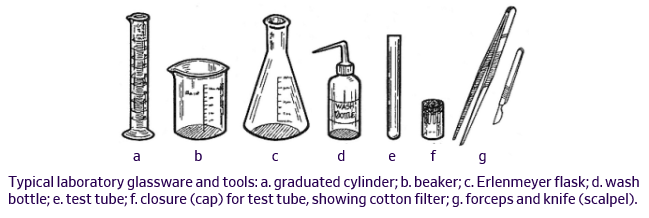
Reusable glass jars with tight‑fitting lids can replace commercial culture vessels. Petri dishes are helpful but not essential; early stages can be performed in jars or small containers. Basic measuring cylinders, beakers, and pipettes are required for media preparation. Distilled or filtered water is necessary for consistent results.

Environmental Conditions

LED grow lights provide adequate illumination for embryo development and plantlet growth. A simple shelving unit can serve as a culture rack. Temperature should remain stable, ideally between 24–28°C, though minor fluctuations are tolerable. Humidity control is not essential for in‑vitro stages but becomes important during acclimation.

Acclimation and Hardening

Plantlets can be hardened in a shaded outdoor area or a simple greenhouse structure. Gradual exposure to increased light and reduced humidity is critical. Mist bottles, shade cloth, and locally available substrates (e.g., coco peat, sand, composted bark) are sufficient for early acclimation.


A Regionally Adapted Protocol for
East African Deployment
– 10 –

Table 1.  Lab Materials for 200‐400 Cacao Plants.
Sterilization and Disinfectant
Surface sterilization of explants, tools, and work surfaces; essential for aseptic technique. Ethanol (70%) 1 L $20
Sodium Hypochlorite (Bleach) 1 L $5
Distilled Water 10 L $5
Tween-20 (Surfactant) 100 ml $10
Growth Medium Components
Foundation of all induction, maturation, and germination media. Murashige and Skoog (MS), with ½ Nitrogen (NH₄NO₃), ½ Potassium (KNO₃), w/o Sucrose, w/o Agar 1 kg $50
Sucrose (Sugar) 500 g $10
Agar (Phyto gel) or Gellan gum (Gel Gro) 200 g $20
Plant Growth Regulators (PGRs)
(Industry‑standard, high‑performance regulators used by Mars, CIAD, CATIE, CEPLAC, Malaysian Cocoa Board)
Auxins — callus induction, rooting

Cytokinins — embryo induction, shoot formation
Ascorbic Acid (Vitamin C) — Antioxidant, browning control 100 g $50
2-iP (6-γ,γ-dimethylallylamino purine) — Cytokinin 100 mg $20
IBA (Indole-3-Butyric Acid) — Auxin 100 mg $20
2,4-D (2,4-Dichlorophenoxyacetic Acid) — Auxin 100 mg $40
ABA (Abscisic Acid) — Stress hormone, embryo maturation 100 g $165
Picloram — Auxin 5 g $397
TDZ (Thidiazuron) — Cytokinin 250 mg $134
GA3 — Gibberellic Acid, Germination 10 mg $36
Coconut Water — Optional organic booster 0 mg $0
pH Adjustment
Adjusting media to pH 5.6–5.8 before autoclaving Sodium Hydroxide (NaOH) 100 g $10
Hydrochloric Acid (HCl) 100 g $10
pH Meter 1 unit $25
Lab Supplies and Equipment
Core infrastructure for aseptic culture, incubation, and growth Sterile Petri Dishes 50-100 $20
Culture Vessels (Jars or Tubes) 200+ $50
LED Grow Lights 15 lamps $300
Scalpel and Forceps 2-3 sets $20
Autoclave or Pressure Cooker 1 unit $100
Laminar Flow Hood (HEPA Filter) 1 unit $1,000
Measuring Cylinders and Beakers Assorted $20
Pipettes and Pipette Tips Assorted $20
Optional Additives
Activated Charcoal — reduces phenolic browning 100 g $10
PPM (Plant Preservative Mixture) — contamination control in difficult environments 100 mg $50


A Regionally Adapted Protocol for
East African Deployment
– 11 –

Step 1

Explant Selection and Sterilization

InVitro Tissue Culture Propagation

Explant Selection and Preparation:

Cacao SE systems begin with juvenile floral or leaf tissues, these tissues contain cells with higher developmental plasticity. Standard practice includes:

  • Selecting tissues from healthy donor plants.
  • Removing surface contaminants.
leaf explants

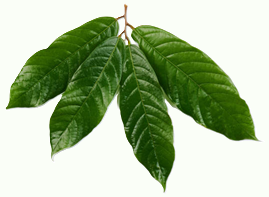
Fig. 2. Select young healthy leaves

Collect Leaf Explants:

  • Choose young (10 - 20 days), fully expanded leaves with flexible petioles from healthy cacao trees grown under full-sun or high-light nursery conditions from the upper canopy.

Sterilize Explants:

  • Sterilize your tools.
  • With 70% ethanol in a spray bottle, spray the leaves to sterilize the surface for 30 secs, then thoroughly rinse with distilled water.
  • Soak leaves in a 2% sodium hypochlorite solution, with 2 drops of Tween 20 added. Stir for 5 minutes

Rinse & Dry:

  • Sterilize your tools
  • Rinse leaves 3 times with sterile distilled water (5 minutes each)

Prepare Explants:

  • While working in the flow of the HEPA air filtration box , cut 1cm squares from each leaf.
  • Cut midrib segments ~5–8 mm
  • Dry on sterile filter paper


A Regionally Adapted Protocol for
East African Deployment
– 12 –

Step 2

Preparing and Sterilizing the Growth Regulators

“Optimized Cacao SE Protocol Absolutely Uses Additional PGRs”

2,4-Dichlorophenoxyacetic Acid (2,4-D)

  • Role: Primary auxin for callus induction in cacao SE literature
  • 2,4-D Stock Solution (1 mg/mL)
  • Weigh 0.1 g 2,4-D
  • Dissolve in 1-2 mL 95% Ethanol
  • Bring to 100 mL with distilled water
  • Sterilize by 0.22 µm filtration (do not autoclave)
  • Label: 2,4-D — Auxin — 1 mg/mL — 4°C — Store Dark

Picloram

  • Role: Highly effective auxin for embryogenic callus induction in cacao; often superior to 2,4‑D
  • Picloram Stock Solution (1 mg/mL)
  • Weigh 0.1 g Picloram
  • Dissolve in 1-2 mL 1 N NaOH
  • Bring to 100 mL with distilled water
  • Sterilize by 0.22 µm filtration
  • Label: Picloram — Auxin — 1 mg/mL — 4°C — Store Dark

Thidiazuron (TDZ)

  • Role: Potent cytokinin‑like regulator for embryo induction and secondary embryogenesis
  • TDZ Stock Solution (1 mg/mL)
  • Weigh 0.1 g TDZ
  • Dissolve in 1-2 mL 95% Ethanol
  • Bring to 100 mL with distilled water
  • Sterilize by 0.22 µm filtration
  • Label: TDZ — Cytokinin-like PGR — 1 mg/mL — 4°C — Dark

6‑Benzylaminopurine (BAP)

  • Role: Cytokinin — embryo induction, shoot development
  • BAP Stock Solution (1 mg/mL)
  • Weigh 0.1 g BAP
  • Dissolve in 1-2 mL 1 N NaOH
  • Bring to 100 mL with distilled water
  • Sterilize by 0.22 µm filtration (do not autoclave)
  • Label: BAP — Cytokinin — 1 mg/mL — 4°C — Store Dark

Indole‑3‑butyric Acid (IBA)

  • Role: Auxin — rooting & embryo germination
  • IBA Stock Solution (1 mg/mL)
  • Weigh 0.1 g IBA
  • Dissolve in 1-2 mL 1 N NaOH
  • Bring to 100 mL with distilled water
  • Sterilize by 0.22 µm filtration (do not autoclave)
  • Label: IBA — Auxin — 1 mg/mL — 4°C — Store Dark

Gibberellic Acid (GA₃)

  • Role: Promotes embryo elongation, germination, and shoot development
  • GA₃ Stock Solution (1 mg/mL)
  • Weigh 0.1 g GA₃
  • Dissolve in 1-2 mL 95% Ethanol
  • Bring to 100 mL with distilled water
  • Sterilize by 0.22 µm filtration
  • Label:
    GA₃ — Gibberellin — 1 mg/mL — 4°C — Store Dark


A Regionally Adapted Protocol for
East African Deployment
– 13 –

Basal Components:

  • Goal: Provides essential nutrients to support the growth and development of plant tissues in vitro
  • Murashige and Skoog (MS) Basal Salts (10× Stock)
  • 43.2 g → 1 L
  • Autoclave only after dilution to 1×
  • Store at 4°C
  • Sucrose (50% Stock)
  • 500 g → 1 L
  • Autoclave OK
  • Agar (4% Stock)
  • 40 g → 1 L
  • Melt before use
  • Autoclave OK

Ascorbic Acid (Optional)

  • Role: Antioxidant (Vitamin C)— reduces browning in cacao explants
  • Ascorbic Acid Stock (10% w/v)
  • 100 g → 1 L
  • Do not autoclave
  • Label: Ascorbic Acid 10% — 4°C — Add after autoclaving

Activated Charcoal (Optional)

  • Role: Phenolic absorption — embryo maturation
  • Activated Charcoal Slurry (10% w/v)
  • 100 g → 1 L
  • Autoclave with medium
  • Label:Activated Charcoal 10% — Room temp — Add before autoclaving

Abscisic Acid (ABA)

  • Role: Used for embryo maturation, improving cotyledon development and desiccation tolerance
  • ABA Stock Solution (1 mg/mL)
  • Weigh 0.1 g ABA
  • Dissolve in 1-2 mL 95% Ethanol
  • Bring to 100 mL with distilled water
  • Sterilize by 0.22 µm filtration
  • Label:
    ABA — Maturation Reg. — 1 mg/mL — −20°C or 4°C — Dark

invitrogardensupply.com

In Vitro Garden Supply
invitrogardensupply.com

plantcelltechnology.com

Plant Cell Technology Coupon
plantcelltechnology.com

himedialabs.com

HIMEDIA, MEDIA BIOSCIENCE COMPANY
himedialabs.com

Fig. 3.  Plant Tissue Culture Medium Sources


A Regionally Adapted Protocol for
East African Deployment
– 14 –

Step 3

Cultivating, Multiplying, and Maintaining Cacao Explants

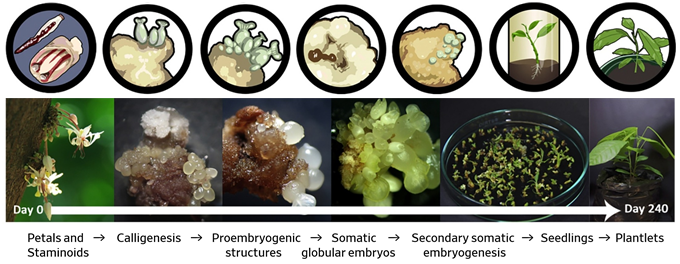
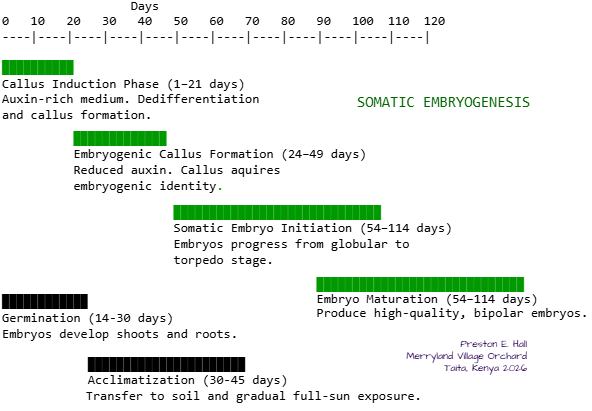
1) Callus Induction Phase

Reset leaf cellular identity and induce a friable, proliferative callus capable of entering the SE pathway. This phase relies on strong auxin signaling to trigger dedifferentiation.

Key regulators are synthetic auxins such as 2,4‑D or Picloram, with concentrations optimized per genotype.

Medium, Induction Formulation:

  • MS basal salts + vitamins (full strength)
  • 2,4‑D: 1-2 mg/L (or picloram: 1-2 mg/L)
  • Sucrose: 20 g/L
  • Gelling agent: gellan gum 2–3 g/L
  • pH: 5.7–5.8

Action:

  • Place sterilized explants adaxial side up on induction medium.
  • Incubate in the dark or very low light at 24–26°C.
  • Subculture every 2–4 weeks; callus appears in ~2–3 weeks.
  • Friable yellow–cream callus is desirable; hard white callus is non‑embryogenic.
  • Goal: friable, nodular callus at cut edges; select embryogenic sectors for transfer.

Fine‑Tune:

  • Hard callus → increase auxin
  • Watery callus → reduce auxin or increase gelling strength
embryogenesic-stuctures

Agricultural Research Service


A Regionally Adapted Protocol for
East African Deployment
– 15 –

2) Callus Proliferation and Embryogenic Nodule Formation Phase

Reduce auxin and introduce low cytokinin‑like activity (TDZ or BAP) to shift callus from non‑embryogenic to embryogenic states. Nodular, translucent sectors indicate early embryo commitment.

Medium, Embryogenic Nodule Formulation:

  • MS basal salts + vitamins
  • 2,4‑D: 0.3–1.0 mg/L (or picloram: 1-2 mg/L)
  • TDZ: 0.01–0.05 mg/L or BAP: 0.05–0.1 mg/L
  • Sucrose: 20–30 g/L
  • Gelling agent: gellan gum 2–3 g/L
  • pH: 5.7–5.8

Action:

  • Isolate embryogenic nodular sectors; monitor for early bipolar structures.
  • Adjust auxin/cytokinin balance if proliferation is poor.

Fine‑Tune:

  • Incubate in dark or very low light at 24–26°C.
  • Timeline: 2–4 weeks.
  • Goal: translucent, granular embryogenic sectors.
  • Compact tissue → reduce TDZ
  • Hyperhydric tissue → reduce TDZ or increase gelling strength
  • No nodules → trial TDZ up to 0.1 mg/L

HEPA filter

IQSDIRECTORY.COM

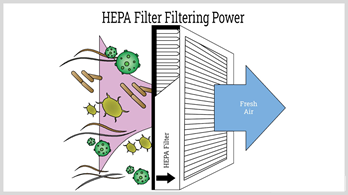
Fig. 4.  All tissue culture activities must be done in a sterile environment. The air must be free of dust, viruses, and bacteria. An airflow system equipped with a HEPA (High Efficiency Particulate Air) filter capable of filtering the air down to 0.3 micrometers (µm) is used for the lab work that takes place in the clean air flow of the filter's output. The tissue samples are then cultivated in sealed, sterile containers.


A Regionally Adapted Protocol for
East African Deployment
– 16 –

3) Maturation of Somatic Embryos Phase

Promote the transition of embryogenic nodules into bipolar, cotyledonary embryos using an auxin‑free medium supplemented with abscisic acid (ABA) and optional osmotic agents to enhance desiccation tolerance and morphological quality.

Medium, Embryogenic Maturation Formulation:

  • MS basal salts + vitamins
  • ABA: 0.5–2.0 mg/L
  • Optional osmoticum: PEG‑4000 20–40 g/L or sorbitol 10-20 g/L
  • Sucrose: 30–40 g/L
  • Gelling agent: gellan gum 3–4 g/L
  • pH: 5.7–5.8

Action:

  • Transfer nodules to maturation medium; monitor cotyledon formation.
  • Select well‑formed embryos; discard abnormal or necrotic tissue.
  • High‑potential embryos show yellow–pink cotyledons.

Fine‑Tune:

  • Soft/glassy embryos → increase ABA
  • Over‑dry embryos → reduce ABA


A Regionally Adapted Protocol for
East African Deployment
– 17 –

4) Germination and Conversion Phase

Convert mature cotyledonary embryos into autotrophic plantlets under controlled light and carbohydrate conditions.

  • MS basal salts (full strength)
  • Activated charcoal: 0.5–2 g/L
  • Plant growth regulators: none, or GA₃ 0.1–0.5 mg/L if needed
  • Sucrose: 10–20 g/L, then step down to 5 g/L
  • Gelling agent: gellan gum 2–3 g/L
  • pH: 5.7-5.8

Action:

  • Transfer cotyledonary embryos to germination medium.
  • Incubate in low–moderate light (10–20 µmol/m²/s) at 24–26°C.
  • Timeline: 3–5 weeks.
  • Goal: opaque, well‑formed embryos with clear shoot–root axis.

Fine‑Tune:

  • Slow maturation → increase sucrose
  • Hyperhydric embryos → increase gelling strength
Table 2.  From healthy cacao leaves to disease-free plants, using an optimized protocol to develop quality tissue culture embryos.


A Regionally Adapted Protocol for
East African Deployment
– 18 –


5) Acclimatization Phase

Transition in vitro plantlets to ex vitro conditions and establish robust seedlings capable of full‑sun field performance.

Substrate Formulation:

  • Peat: 50%
  • Perlite: 25%
  • Vermiculite: 25%

Action:

  • Gently remove agar from roots.
  • Pot into sterile substrate.
  • Maintain 90–95% humidity; gradually harden off over 2–4 weeks.
  • Provide 50–70% shade during early acclimatization.

🌍 Reference alignment
      The multi-stage, hormone-regulated propagation protocol above has been assembled from the scientific literature on cacao somatic embryogenesis authored by major cacao researchers.
      Preston E. Hall


A Regionally Adapted Protocol for
East African Deployment
– 19 –

Step 4

Acclimating Plantlets to Full-Sun Conditions

Unlike traditional shade‑grown systems, this workflow supports full‑sun cultivation, where trees exhibit faster growth and higher fruit production but require increased irrigation and nutrient inputs—particularly calcium and nitrogen—during hardening and field establishment.

LED Based Acclimation for Full‑Sun Cacao

Stage 1 — In‑Vitro to Ex‑Vitro:

  • Start 20 µmol; to prevent light-shock.
  • Increase 5–10 µmol/day; if leaves stay turgid & no chlorosis.
  • Target 150–200 µmol; to build sun‑leaf anatomy.
  • Notes: Use 4000–5000K LEDs (broad spectrum).
  • Maintain 30–45 cm distance to avoid leaf heating.
  • Photoperiod: 12–14 hours.

Stage 2 — Nursery (Full‑Sun Conditioning):

  • Goal: Condition plantlets to true full‑sun PAR levels (700–1000+ µmol).
  • Shade cloth 50% for 2 weeks;
    LED PAR: 250–350 µmol, 30–40% power.
  • Then 30% for 2 weeks; LEDs: 400–600 µmol.
  • Increase irrigation during transition 10-20%.
  • Apply (CaNO₃) foliar (0.5–1.0%) weekly, to strengthen leaves.
  • Then remove shade entirely; LEDs + ambient sun: target 300–400 µmol combined.
  • Notes: Watch for leaf scorch at >1100 µmol & pale new leaves (increase Ca or N slightly).

Stage 3 — Field‑Ready:

  • Height 30–45 cm.
  • Stem diameter 4–6 mm.
  • Leaves hardened to direct sunlight.
  • Expose plantlets to 900–1100 µmol for 2–3 hours/day for 3 days. If no scorch → ready for field.


A Regionally Adapted Protocol for
East African Deployment
– 20 –

Water Requirement for Full-Sun Cacao

(liters/day/tree)

Age Canopy
Status
Rainy
Season
Dry
Season
Design
Value
0 - 1
year
Small canopy,
establishing
1 - 2 3 - 6 3
1 – 3
years
Rapid vegetative
growth
2½ - 4 5½ - 10 6
3 - 5
years
First strong
cropping
5 - 7 9 - 13 9
>5 years
(mature)  
Full canopy,
full bearing
6 - 9 10 - 15 10

NOTES:

  • Adjust for soil type: sandy soils may require 10-20% more water.
  • Avoid waterlogging during rainy season — ensure drainage is clear.
  • For drip systems: divide daily volume by emitter output to set runtime.
  • Additional balanced fertilizer required.
  • Trees planted 3 x 3 meter apart.

Plantlets will be genetically identical,
disease‑free, and full-sun‑adapted

“It always seems impossible until it’s done”
Nelson Mandela

Merryland Village Orchard, Taita, Kenya (c)